
TIFS works to strengthen the ecosystems needed to accelerate investments in regenerative and agroecological transitions.
Transforming food systems requires coordinated action among producers, businesses, investors, philanthropy, researchers, and governments. TIFS helps connect these stakeholders, develop shared intelligence, and catalyze collaboration so that capital, markets, and innovation can better support regenerative outcomes.
Through convenings, research, and partnerships, we help actors across the food and finance sectors build a shared understanding of systemic barriers and opportunities. We typically work with producer-led initiatives that are grounded in a regional context to develop strategies and actions that advance regenerative markets. This work creates the conditions for stakeholders to align incentives, identify priority investments, and mobilize resources that support long-term ecological, social, and economic resilience.
Our ecosystem-building approach focuses on:
Connecting stakeholders across food systems and finance
We convene producers, entrepreneurs, investors, philanthropists, and policymakers to build trusted relationships and align around opportunities to advance regenerative and agroecological transitions.
Building collective intelligence
Through collaborative learning and analysis, we help stakeholders understand the systemic dynamics shaping food systems and identify pathways for coordinated action to shift conditions in favor of producers, communities, and nature.
Catalyzing collaboration and innovation
We work with partners to strengthen existing initiatives and create innovations that fill gaps to unlock investment opportunities and strengthen regenerative markets.
Supporting system-level change
By strengthening networks, creating financial innovations, and aligning stakeholders, TIFS helps create the conditions for new investments in producer-led initiatives and businesses that accelerate regenerative transitions.
Our ecosystem building work is global, with support for place-based initiatives in the United States of America, Canada, Kenya, Brazil, Indonesia, and other countries.
Regenerative Catalysts
One of the primary ways TIFS advances ecosystem building is through the Regenerative Catalysts initiative.
Regenerative Catalysts are place-based initiatives that bring together producers, businesses, investors, and regional partners to advance regenerative agriculture and food systems transitions. These frontrunner efforts are working to develop viable markets, business models, and financing approaches that support farmers and land stewards while delivering ecological and community benefits. They demonstrate what is already possible and are charting diverse pathways to a regenerative future.
TIFS works alongside these initiatives to strengthen collaboration among stakeholders, refine scaling, financial and operating models, and connect partners with sources of capital.
By supporting real-world demonstrations of regenerative systems, Regenerative Catalysts help generate the scaling partnerships, financial approaches, and practical insights needed to accelerate broader food systems transformation.

Report: Financing for Regenerative Agriculture
For investors in agrifood systems, business as usual is no longer viable. Evidence shows that the negative externalities of global agrifood systems outstrip the global market value of agricultural production by a ratio of two to one. Our food system has become value destroying as measured in climate change, water scarcity, biodiversity loss, diet related disease, and erosion of farmer well-being – all of which threaten the resilience of agrifood supply chains.
The Financing for Regenerative Agriculture report by TIFS, Pollination, and The Rockefeller Foundation provides an overview of diverse, innovative financial structures that can be adapted for a range of contexts, producers, and investment needs to drive regenerative transitions. The report sheds light on how investors are beginning to catalyze the transition to a more resilient food system, and builds the case that viable pathways exist for other capital providers to join them.
READ: Financing for Regenerative Agriculture
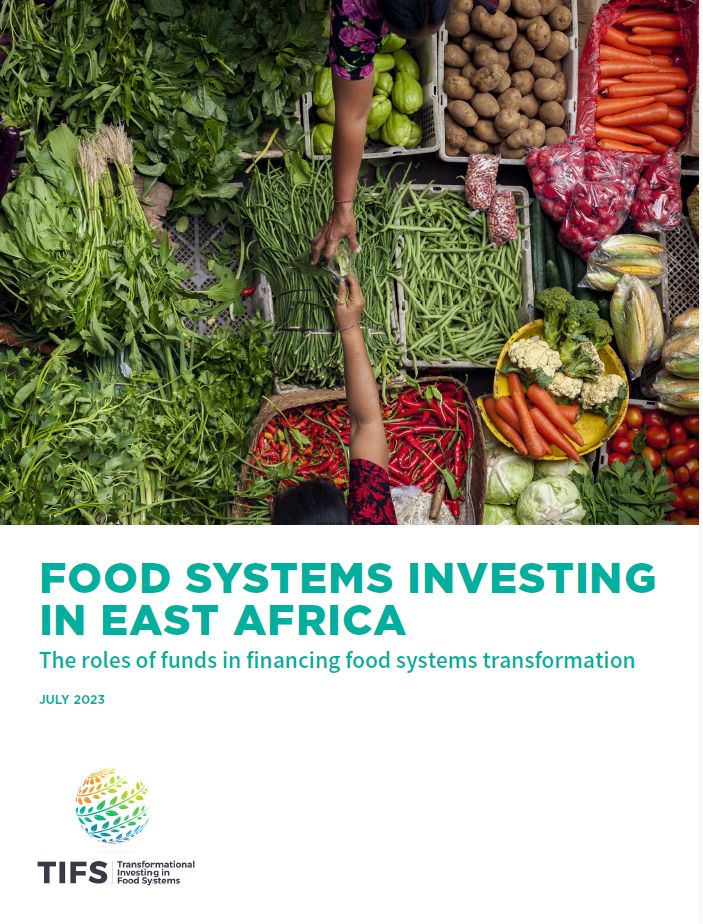
Case Studies: Food Systems Investing in East Africa
To what extent are funds investing in food and agriculture in East Africa designed to contribute to transforming food systems? In 2022, TIFS set out to analyze the food systems investing landscape in East Africa.
While providing key insights about impact investments in East Africa, the report also highlights opportunities to strengthen the field of food systems investing in East Africa. We are following up on recommendations to build the field of agroecological and regenerative investing.
- Developing an investment thesis for agroecology, regenerative approaches, and Indigenous Foodways
- Organizing a community of food systems–investing fund managers
- Catalyzing collaboration and collective actions to enhance impact in food systems
READ: Food Systems Investing in East Africa: The roles of funds in financing food systems transformation
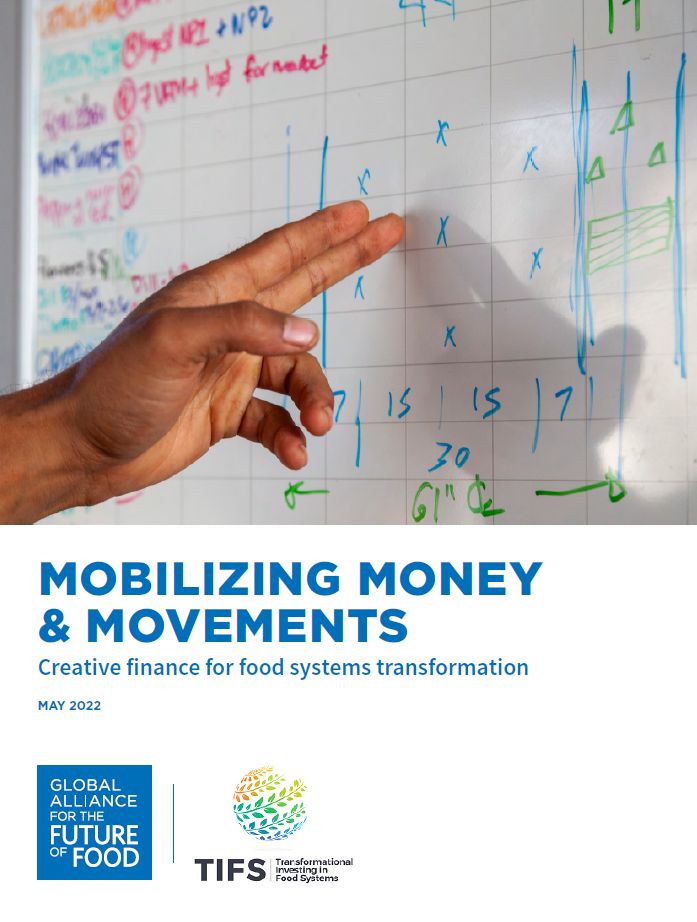
Case Studies: Mobilizing Money and Movements
The Global Alliance for the Future of Food and TIFS set out to look for examples of financial investing that propelled food systems transformation forward. The six Beacons of Hope stories presented in this report are enterprises and initiatives that illustrate how a blend of financial and non-financial investments are necessary to generate positive externalities for communities and nature.
Private, public, and commercial finance were complemented by investments in advocacy, organizing, creativity, policymaking, and time. Strategies embraced solidarity economy principles such as: shared governance and participation of all stakeholders including farmers and community members; cost-conscious approaches that work with ecosystems; investing in training and dignified work; and values-aligned blended finance.